
Ultrasonic Fogger Modules for Disinfectant Equipment: 2-Head or 10-Head?
If you are building a disinfectant fogging machine, you need the atomizing component, its matched power supply and a tank arrangement that delivers mist to the outlet. A complete room fogger and an ultrasonic fogger module are different purchases. This guide is for equipment manufacturers selecting the module.
The PHIMAXX MS-02P is a two-head PPS ultrasonic mist maker with a stated output of 1.2–2.0 L/h. The ten-head MS-10P offers up to 10 L/h. Choose between them by the output your equipment needs, the working liquid and the available installation space—not by head count alone.
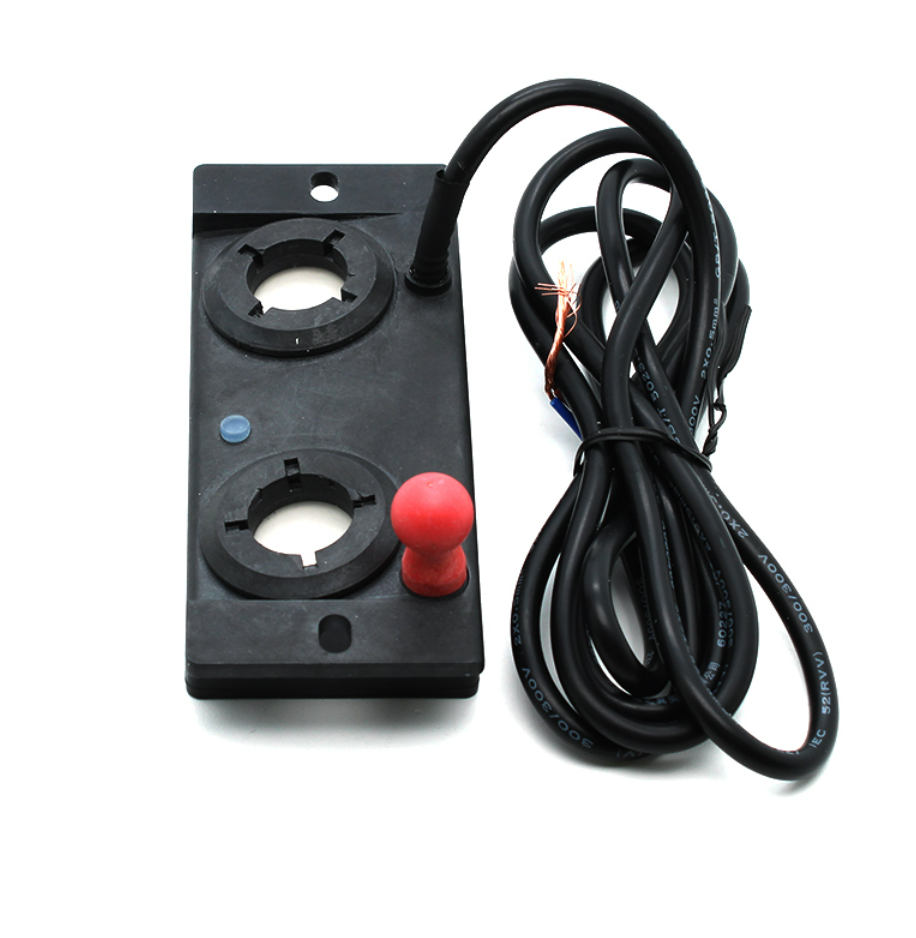
Do you need a fogger module or a complete disinfection machine?
An immersion-type ultrasonic module generates mist at the liquid surface. The OEM still provides the tank, mist outlet, airflow, filling arrangement and machine controls. The matched DC power supply drives the module; it does not replace those parts of the equipment.
This distinction helps when comparing supplier quotations. A bare atomizer, a module with a power supply and a finished fogging machine have different scopes. For MS-02P and MS-10P, specify whether the quotation should include the matched supply, supporting float assembly, cable connection and spare discs.
These modules are equipment components. Their output specification does not establish a disinfectant dose, room coverage or microbial reduction. Those results depend on the formulation and the completed machine.
Start with the working liquid
Describe the liquid as it will be used in the machine. Include the chemical name, final concentration, pH if known, operating temperature and planned hours per day. A concentrate that is diluted before use is a different selection problem from the concentrate itself.
The PPS model datasheets list selected dilute aqueous disinfectants below 500 ppm, including hypochlorous acid, sodium hypochlorite, chlorine dioxide and quaternary ammonium compounds. That does not establish compatibility with every product containing those ingredients. Hydrogen peroxide, saline and other formulations need their own application review and sample testing.
Check the complete liquid path, including the discs, seals, tank, tubing, sensor and cable entry. A corrosion-resistant housing cannot compensate for an unsuitable seal or tank material. For a material comparison, see our PPS vs 316 guide.
2-head vs 10-head: how much mist does the machine need?
The MS-02P is the smaller option when its 1.2–2.0 L/h atomization capacity meets the prototype requirement. The MS-10P provides up to 10 L/h nominal output for equipment needing more mist. Actual output depends on the liquid and operating conditions.
| Selection point | MS-02P | MS-10P |
|---|---|---|
| Atomizing heads | 2 | 10 |
| Nominal atomization capacity | 1.2–2.0 L/h | Up to 10 L/h |
| Ideal liquid use over 30 minutes at stated output | 0.6–1.0 L | Up to 5 L |
| Module power | Approximately 58 W | Approximately 340 W at 45 VDC |
| Matched power supply rating | 100 W | 400 W |
| Dimensions in latest datasheet | 76 × 82 × 27 mm | 276 × 82 × 27 mm |
| Nominal / stated DC operating range | 36 VDC nominal | 36–50 VDC constant-power range |
| Adjustable-output voltage range | 24–36 VDC | 24–36 VDC |
| Atomizing discs | Ø25 mm quartz-glass | Ø25 mm quartz-glass |
| Water-level protection | PPS mechanical float-type sensor | PPS mechanical float-type sensor |
The 30-minute figures above are simple capacity × time calculations, not measured delivery results. They help plan tank volume and refill needs. They do not specify a dose for a room, and the tank must retain enough liquid to maintain the required operating depth.
For example, a prototype requiring 1 L/h at its outlet should not automatically be assigned a module rated at 1 L/h. Some mist may condense inside the tank or outlet. Measure collected or delivered output in the intended layout, then select sufficient module capacity. If the smaller module meets the measured requirement, adding heads adds power and liquid demand without necessarily improving the machine.
Treat the table as a module comparison. The listed dimensions do not define the complete installation envelope: allow space for the sensor rods, cables, any supporting float assembly and service access.
Also separate mist generated at the module from mist delivered through the machine outlet. Tank airflow, condensation and the outlet arrangement affect delivered output. For a prototype, measure the assembled system rather than selecting head count from room volume alone. Disinfection performance requires separate validation of the liquid and complete equipment.
Match the DC output as well as the AC input
An AC 230 V label tells you the input accepted by a power supply. It does not tell you whether its DC output matches the atomizer. When checking an existing supply, send a clear label photo showing DC voltage, current and rated power.
The MS-02P datasheet specifies a nominal 36 VDC input and a matched 100 W supply. The MS-10P datasheet lists a 36–50 VDC constant-power range and a matched 400 W supply. These supply ratings are not the modules' stated power consumption. Confirm the actual supplied output voltage, polarity, connector and local AC input before installation.
Distinguish variable output from a control signal
Both PPS datasheets list a 24–36 VDC range for adjustable output. This is not a specification for a PWM, 0–10 V, 4–20 mA or digital control input. If your machine uses a PLC or microcontroller, describe the required signal and output range so the electrical arrangement can be checked before ordering.
Understand the mechanical float sensor and tank water level
These PPS modules use a PPS mechanical float-type water-level sensor with dry-run protection. The float needs to move freely as the liquid level changes. Leave clearance around it and inspect the mechanism for deposits or interference during maintenance.
The recommended operating water level in both current datasheets is 75 mm, measured from the bottom of the atomizer to the liquid surface. It is not 75 mm above the atomizing discs. The surface should be approximately level with the top of the mechanical sensor rod.
The datasheets describe shutdown when the surface falls approximately 45 mm below the top of the sensor rod; the actual cutoff may vary with water quality. This is a protection threshold, not the normal operating level. Check shutdown and recovery during commissioning.
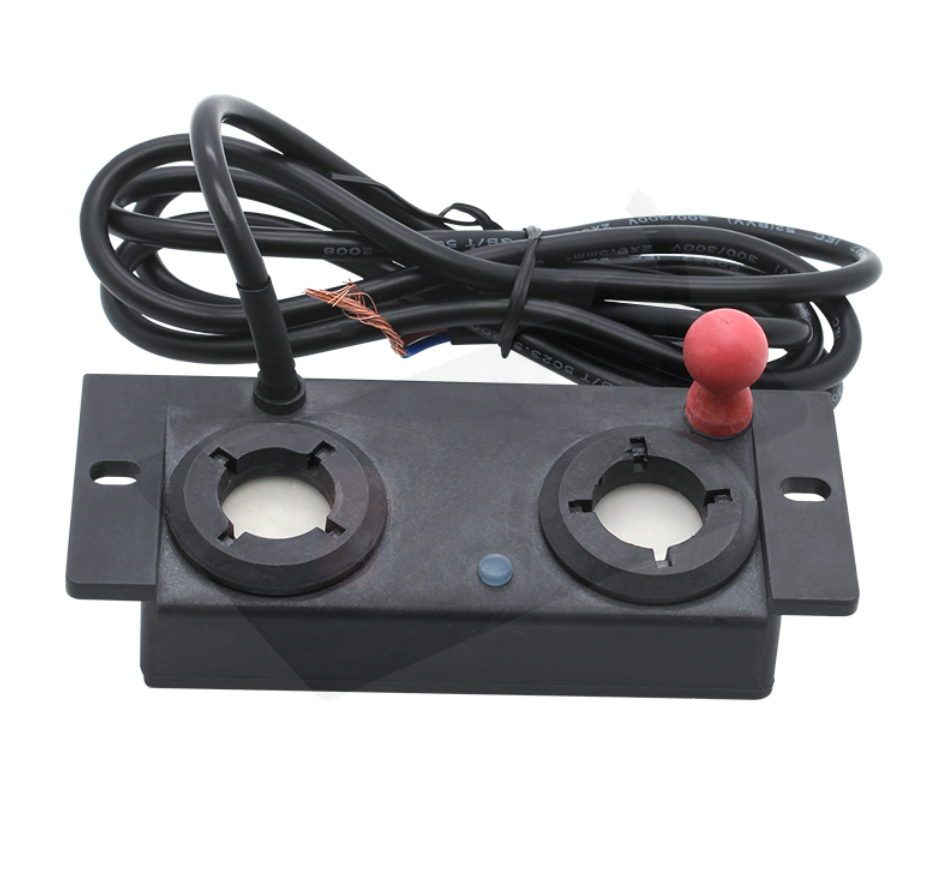
If a supporting float assembly is used, allow it to move without contacting the tank walls, pipework or cable. Neither the supporting float nor the low-water sensor automatically refills a tank unless a separate filling system is provided. Keep the matched power supply and cable joints in a suitable dry installation area.
Compare supplier offers on the same basis
| Ask the supplier | Why it matters |
|---|---|
| Which parts actually contact the liquid? | Check housing, retaining rings, sensor, discs, seals and cable entry; “plastic housing” alone is incomplete. |
| At what liquid, DC voltage and water depth was output stated? | Output figures from different conditions are not directly comparable. |
| Is the supply rating module consumption or power-supply capacity? | MS-02P pairs approximately 58 W module power with a 100 W supply; MS-10P pairs approximately 340 W at 45 VDC with a 400 W supply. |
| What is included in the set? | Confirm the power supply, supporting float, connector, cable and consumable discs before comparing prices. |
| What evidence covers the intended formulation? | A water demonstration or a housing material name does not establish service life in the working chemical. |
Test the sample in the intended machine layout
Use the final working formulation, the planned tank and the intended airflow. Record output, liquid temperature, operating depth and run time so the results can be compared. Inspect the discs, retaining rings, sensor and cable entry before and after the run, then check whether the planned cleaning method restores output.
Plan access for replacing the consumable discs and inspecting the float mechanism. The PPS datasheets list a 3,000–4,000-hour disc service interval depending on the liquid and conditions; this is not a guaranteed lifetime in an untested chemical solution.
Questions before ordering a PPS fogger module
Can I replace a standard stainless-steel mist maker with PPS?
Possibly, but check the DC supply, connector, tank opening, water depth and sensor clearance as well as the chemistry. A two-head PPS module is not necessarily a drop-in replacement for another two-head model.
Does the mechanical float sensor fill the tank?
No. The PPS mechanical float-type water-level sensor provides low-water protection. Automatic filling needs a separate refill arrangement. A supporting float assembly is another separate part: it carries the module in the tank.
Does a 400 W supply mean the ten-head module always consumes 400 W?
No. The supply capacity is 400 W; the MS-10P datasheet states approximately 340 W module power at 45 VDC. Use the module operating specification and the actual duty cycle when estimating electrical demand.
Can the module run any disinfectant below 500 ppm?
No. The datasheets refer to selected dilute aqueous formulations, not every chemical below that concentration. Send the exact working formulation and operating conditions for review. For HOCl and hypochlorite, use our HOCl and hypochlorite guide; saline and hydrogen peroxide require separate evaluation.
Download MS-02P datasheet · Download MS-10P datasheet
Request a PPS atomizer sample quotation
Send PHIMAXX your liquid name and working concentration, required output, daily operating hours and a tank photo or drawing. Include the sample quantity and destination country. If you already have a power supply, attach its label photo.
We can review whether to begin with MS-02P or MS-10P and quote the module with its matched power supply. Email info@phimaxx.com with the subject PPS atomizer sample inquiry, or use our project inquiry form.